When we think about events, we often focus on experience. The energy, the atmosphere, the production, the content, the crowds, the excitement, but we don’t always stop to consider how event environments actually feel for the humans moving through them.
Environments shape experience far more than many people realise. Noise levels, crowd density, lighting, navigation, layout, communication and unpredictability all affect how people regulate, process information and feel within a space.
For some people, these elements may simply feel tiring.
For others – especially neurodivergent attendees – they can become overwhelming very quickly.
Sensory Load Is Real
Events are often high-stimulation environments by design.
- Bright lighting
- Multiple conversations
- Music
- Announcements
- Crowds moving in different directions
- Long queues
- Busy exhibition aisles
- Constant social interaction
While this energy can feel exciting for some attendees, it can also create significant sensory and cognitive load. Many people leave events feeling completely exhausted without fully understanding why, and often, it is not one single thing causing the overwhelm.
It is the accumulation of sensory input over time.
- Noise
- Fatigue
- Social interaction
- Navigation stress
- Decision-making overload
- Uncertainty
- Lack of space to pause or regulate
This is why event wellbeing and neuroinclusion conversations matter so much. When environments are designed without considering human regulation, many people are unintentionally excluded from fully participating.
Crowd Psychology and Stress
Crowds affect behaviour. They affect stress levels, processing ability, confidence and movement. Poorly designed crowd flow or unclear layouts can increase anxiety significantly, particularly for people who:
- process information differently
- experience social anxiety
- become overwhelmed in busy spaces
- or struggle with uncertainty and unpredictability
Something as simple as not knowing where to go can create huge amounts of stress.
Poor way-finding is not just an operational issue, it is a wellbeing issue too. Clear signage, visible support points and calmer navigation routes can dramatically improve how safe and manageable an event feels.
Designing for Humans
For many years, event design has prioritised efficiency, capacity and spectacle. Now, the industry has an opportunity to also prioritise human experience in a deeper and more intentional way.
Designing for humans means considering:
- how people move through spaces
- where they can pause and regulate
- how information is communicated
- whether environments feel psychologically safe
- and whether people can access support without fear or judgement
Importantly, designing for wellbeing does not always require huge budgets or major redesigns. Often, smaller thoughtful changes make a significant difference.
Examples include:
- quiet rooms
- decompression spaces
- calmer breakout areas
- better signage
- accessible communication
- visible wellbeing support
- seating areas away from crowds
- predictable schedules
- lower stimulation zones
- clearer maps and navigation points
These adjustments can completely change how people experience an event.
Psychological Safety Matters Too
Wellbeing is not only physical or sensory, it is emotional too.
People thrive in environments where they feel safe to:
- ask for help
- take a break
- communicate their needs
- and exist without judgement
For many neurodivergent people especially, masking and “pushing through” has become normalised within event spaces. But psychologically safe environments reduce the pressure to constantly self-manage overwhelm alone, and that is why visible support matters, and why supervision, accessibility awareness and compassionate event culture matter too.
Better Events Are Designed Intentionally
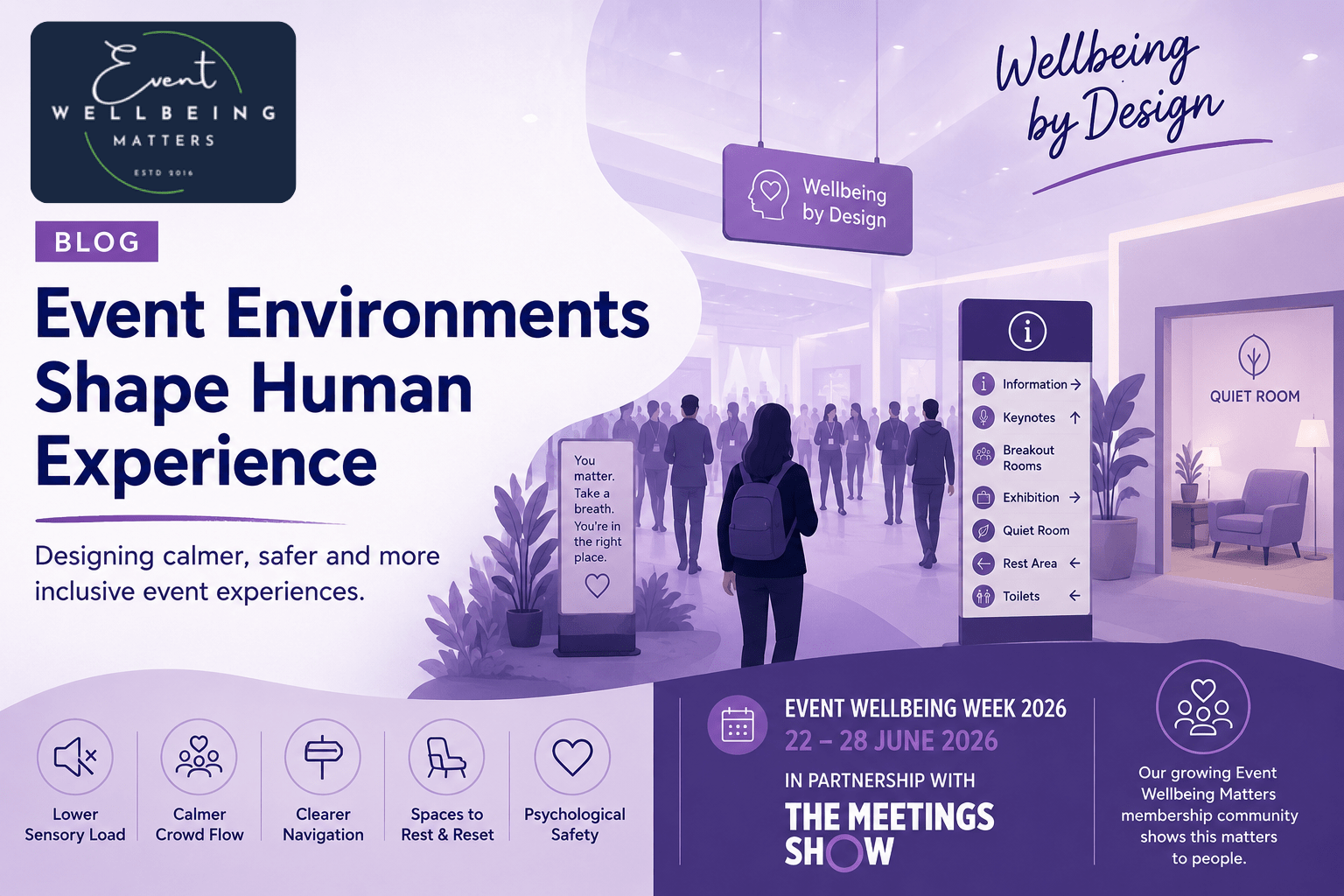
At EventWell, we believe wellbeing is not an add-on, it is part of good event design. That is why the theme for Event Wellbeing Week 2026 is:
Wellbeing by Design
Because healthier, safer and more inclusive events do not happen accidentally, they happen intentionally. As conversations continue to grow through our Event Wellbeing Matters membership community, we are encouraged to see more event professionals recognising that accessibility, inclusion and wellbeing are deeply connected.
The future of events is not simply bigger or louder, it is more human-centred and that future can be designed.
Event Wellbeing Week 2026
22–28 June 2026
In partnership with The Meetings Show

