The events industry is filled with incredibly capable people. People who can problem-solve under pressure, lead teams through chaos, manage complex logistics. adapt instantly and keep smiling while everything around them changes by the minute.
But behind that professionalism, many people are quietly struggling.
- Struggling with overwhelm.
- Exhaustion.
- Burnout.
- Anxiety.
- Masking.
- The pressure to always appear “fine.”
And often, people do not talk about it because event culture has historically rewarded resilience over vulnerability. The ability to “push through” has become normalised, but constantly pushing through comes at a cost.
The Pressure to Keep Going
Events are high-pressure environments by nature.
- Long hours.
- High expectations.
- Constant stimulation.
- Tight turnarounds.
- Unpredictability.
- Crowds.
- Noise.
- Social intensity.
For many people, particularly neurodivergent professionals, these environments can require an enormous amount of self-regulation, and yet many still feel unable to say:
- “I’m overwhelmed.”
- “I need a break.”
- “I don’t understand.”
- “I need support.”
- “I’m struggling.”
Because there is often a fear of being judged as difficult, unreliable or incapable.
So people mask.
They overcompensate, stay quiet, push through exhaustion, hide anxiety, and pretend they are coping, and over time, that becomes incredibly draining.
The “Always On” Industry
The events industry can sometimes unintentionally create “always on” environments. Fast replies are expected, energy is expected, availability is expected, performance is expected, even rest can feel difficult to justify.
For freelancers especially, the pressure can feel even greater.
Many freelancers worry that:
- asking for support may impact future work
- setting boundaries may be seen negatively
- taking time off may mean losing opportunities
- speaking honestly about wellbeing could affect reputation
That creates environments where people feel they must continue functioning no matter how depleted they are becoming, and while passion is one of the most beautiful things about the events industry, passion without protection can quickly lead to burnout.
Psychological Safety Matters
Psychological safety is not about removing accountability or lowering standards. It is about creating environments where people feel safe enough to:
- communicate honestly
- ask questions
- raise concerns
- access support
- make mistakes
- take breaks when needed
- and be human
People perform better when they feel psychologically safe. Teams collaborate better, communication improves, problems are escalated earlier, support becomes visible and environments become healthier for everyone.
This matters not only for event professionals and teams, but also for attendees, because attendees notice culture too.
They notice whether support feels approachable, whether wellbeing is visible, whether asking for help feels safe or uncomfortable, whether environments feel welcoming or overwhelming.
Psychological Safety Is Operational Design
One of the biggest misconceptions around wellbeing is that it sits separately from operations, in reality, wellbeing is deeply operational.
Psychological safety can be designed into environments through:
- visible support teams
- compassionate leadership
- clear communication
- calm escalation processes
- supervision and welfare visibility
- quieter regulation spaces
- realistic scheduling
- proper breaks
- accessible information
- respectful team culture
These things are not “extras, they directly influence how safe people feel within an environment, and importantly, people should not have to reach crisis point before support becomes visible.
Leadership Shapes Culture
Leaders set the emotional tone of environments. When leaders model healthy boundaries, compassion and openness around wellbeing, it creates permission for others to do the same. When leaders dismiss exhaustion, glorify burnout or normalise constant pressure, teams often learn to stay silent instead.
The future of healthier event culture depends on leadership that understands people are not machines,they are humans working in highly demanding environments.
Better Events Start With Safer Environments
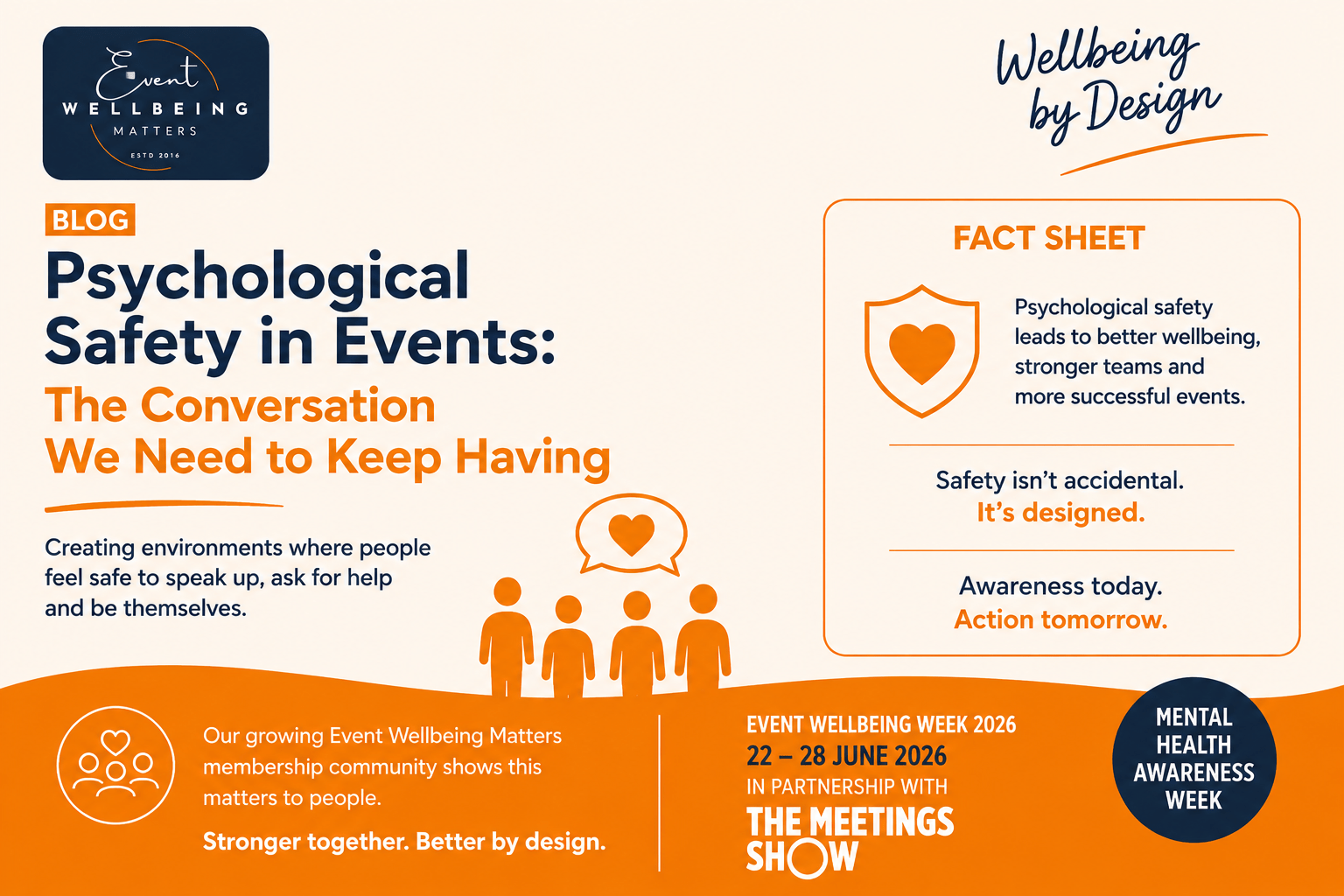
At EventWell, we believe wellbeing is not an add-on, it is part of good event design and good event culture. That includes psychological safety, because healthier environments do not happen accidentally, they happen intentionally.
As these conversations continue growing through the Event Wellbeing Matters membership community, we are seeing more people openly discussing burnout, overwhelm, inclusion and the realities of working within high-pressure event environments.
And that matters, because conversations create culture change, and culture change creates impact.
Event Wellbeing Week 2026
22–28 June 2026
In partnership with The Meetings Show

