When people think about accessibility and wellbeing in events, they often imagine huge operational changes, expensive redesigns or complicated strategies.
But in reality? Some of the most meaningful improvements are surprisingly small.
Small changes can dramatically reduce stress, improve regulation, increase psychological safety and help people feel more comfortable within event environments, especially for people who are neurodivergent, anxious, overwhelmed or simply exhausted.
At EventWell, we often say:
wellbeing is built through thoughtful design.
And thoughtful design does not always have to be complicated.
Sometimes, it is the small details people remember most.
Seating Layouts Matter More Than People Realise
The way spaces are arranged directly affects how people feel. Crowded layouts, blocked walkways and tightly packed seating can quickly increase stress and overstimulation.
Simple adjustments can make environments feel significantly calmer:
- leaving more space between seating
- creating quieter breakout corners
- avoiding unnecessary bottlenecks
- ensuring people can easily enter and leave spaces
- offering varied seating options
Some attendees want to sit in the centre of activity. Others need to stay near exits, quieter areas or lower traffic zones. Designing with flexibility in mind supports everyone better.
Quiet Spaces Are Not “Nice Extras”
For many attendees, quiet spaces can completely change whether an event feels manageable or overwhelming, and importantly, quiet spaces are not only beneficial for neurodivergent attendees.
People may need a quieter environment because of:
- anxiety
- fatigue
- migraines
- sensory overload
- chronic illness
- stress
- panic
- emotional overwhelm
- or simply needing a moment to regulate
A calm, supervised space where people can pause without judgement can make an enormous difference. Sometimes the ability to step away for ten minutes is what enables somebody to remain at an event for the rest of the day.
Sensory Supports Help More People Than You Think
Simple sensory supports are often low-cost but highly impactful.
Things like:
- noise-reducing headphones
- softer lighting
- fidget items
- visual schedules
- calmer décor
- reduced sensory zones
- lower-volume spaces
These supports can reduce cognitive load and help people regulate more effectively, and the reality is many attendees benefit from calmer environments, even if they do not identify as neurodivergent.
Hydration and Pacing Matter Too
Basic wellbeing needs are often overlooked in busy event environments. Long queues, limited seating, poor scheduling and lack of hydration points all contribute to fatigue and stress.
Simple operational improvements help enormously:
- accessible water stations
- realistic scheduling
- proper breaks between sessions
- avoiding excessive queueing
- quieter recharge areas
- spaces where people can sit without pressure to network
People regulate better when their basic needs are supported.
Crew Wellbeing Is Event Wellbeing
Event wellbeing conversations cannot focus only on attendees. Crew, suppliers, freelancers and event teams are often operating under intense pressure behind the scenes. Long shifts, constant stimulation and “always on” expectations can quickly lead to exhaustion.
Supporting crew wellbeing may include:
- visible welfare support
- proper rest breaks
- realistic shift planning
- quiet backstage spaces
- compassionate leadership
- clear communication
- and environments where asking for help feels safe
Because healthier teams create healthier events.
Communication Reduces Anxiety
One of the simplest but most powerful tools in event wellbeing is clear communication, because uncertainty creates stress.
Attendees feel more comfortable when they know:
- where they are going
- what support is available
- what environments will feel like
- where quieter spaces are located
- who to approach for help
- and what to expect before arriving onsite
Pre-event information can significantly reduce anxiety and overwhelm.
Things like:
- accessibility guides
- sensory information
- venue photos
- maps
- FAQs
- support contact details
- and clear signage
All help people prepare mentally before attending.
Visible Support Changes Behaviour
People are far more likely to access support when it feels visible, approachable and normalised. Support should not feel hidden away or difficult to ask for. Visible wellbeing hosts, calm spaces and approachable support teams help create psychological safety across the wider event environment.
And often, simply knowing support exists helps people feel more confident attending in the first place.
Better Events Are Built Intentionally
The future of events is not only about bigger experiences, it is about better human experiences.
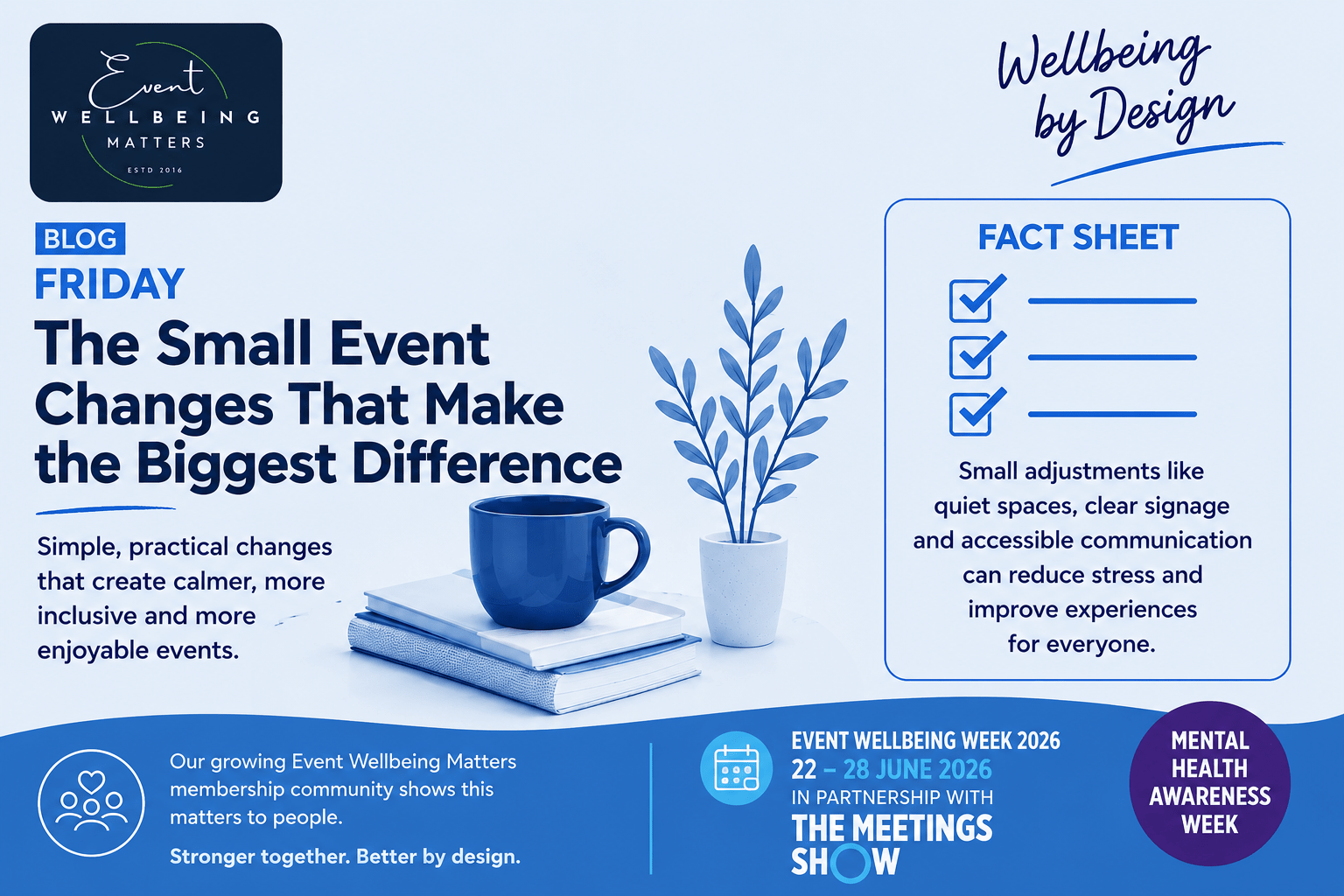
That does not always require massive budgets or complex transformations, sometimes, the smallest changes create the biggest impact, at EventWell, we believe wellbeing is not an add-on. It is part of good event design.
And through our growing Event Wellbeing Matters membership community, we are seeing more event professionals actively exploring how to create calmer, safer and more inclusive environments for everyone.
Because better events do not happen accidentally.
They happen intentionally.
Event Wellbeing Week 2026
22–28 June 2026
In partnership with The Meetings Show

